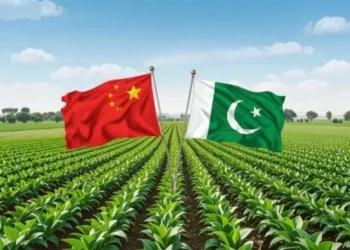

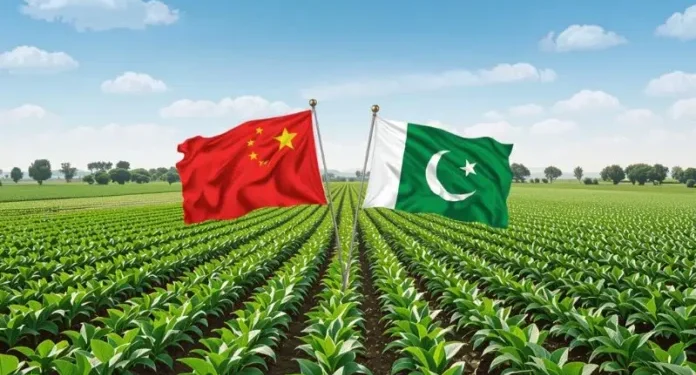
Pakistan is moving toward a new phase of industrial cooperation with China in electric vehicles, batteries, renewable energy and related technologies. The bigger question is whether this cooperation can build a Pakistan-China green supply chain rather than leave Pakistan dependent on imported components.
The opportunity is becoming clearer in 2026. Pakistan has introduced its New Energy Vehicles Policy 2025–30, while Chinese companies are engaging with Pakistani businesses on batteries, energy storage, EVs and clean-energy technologies.
For Pakistan, the opportunity goes beyond putting more electric vehicles on the road. It is about developing the manufacturing capabilities behind them.
From EV Assembly to Local Manufacturing
Pakistan’s New Energy Vehicles Policy 2025–30 provides the current framework for developing the country’s electric and new-energy vehicle industry. Government investment material also identifies opportunities in EV assembly, lithium-battery pack assembly, charging infrastructure, motor controllers, electronic control units and power electronics.
This distinction between assembly and manufacturing matters.
An EV assembled in Pakistan can increase industrial activity, but the economic benefits become broader when local companies begin producing components. Batteries, motors, controllers, charging equipment and power electronics can create supplier networks around vehicle manufacturers.
That would allow Pakistan to capture more value from the transition toward electric mobility.
Batteries Could Become a Core Industry
Battery manufacturing is one of the clearest areas of opportunity.
Pakistan’s Consulate General in Guangzhou identified rising domestic demand for energy storage and highlighted the country’s dependence on imported battery cells, packs and related materials. Its 2026 investment pitchbook also identified local battery manufacturing as an area with investment potential.
The demand is not limited to electric vehicles.
Pakistan’s growing use of solar power is also increasing interest in batteries for backup power and energy storage. A stronger domestic battery industry could therefore serve several markets, including EVs, solar installations, telecommunications and industrial users.
In this context, battery production could become a link between Pakistan’s transport and energy sectors.
China Brings an Established Industrial Ecosystem
China’s advantage lies not only in individual battery manufacturers but in the wider ecosystem surrounding them.
The country has developed extensive supply chains covering battery production, materials, manufacturing equipment, engineering and energy-storage systems.
Pakistan has already begun exploring this ecosystem. In May 2026, a Pakistani delegation visited CALB Group in China to examine lithium-ion battery technologies and manufacturing capabilities. In June, Pakistan’s Saigols Group and China’s Hebei Juhang Energy Technology Group signed an MoU covering lithium-ion batteries, energy-storage systems and EV charging infrastructure.
These engagements show that cooperation is increasingly focused on specific technologies and industrial applications.
Renewable Equipment Offers Another Opportunity
The green supply chain should not be limited to electric cars.
Pakistan’s renewable-energy expansion creates demand for solar equipment, batteries, inverters, charging infrastructure and electrical components. Chinese manufacturers have significant experience across these industries, creating opportunities for investment and technology partnerships.
For Pakistan, the difference between importing equipment and producing it locally is important.
Local manufacturing can generate demand for Pakistani engineers, technicians, metal and electronics suppliers, logistics companies and maintenance services. Over time, this can create industrial clusters rather than isolated assembly operations.
Technology Transfer Will Be Critical
A green industrial base cannot be built simply by importing advanced machinery.
Pakistan will need skilled workers, testing facilities, engineering expertise and local suppliers capable of meeting international standards.
The Ministry of Industries and Production said in May that Chinese investors were interested in EV assembly as well as manufacturing of EVs, batteries and advanced energy-storage batteries. The ministry also highlighted lithium-ion and sodium-ion technologies.
This makes skills development an important part of the equation.
Battery chemistry, electronics, thermal management, software and power systems require specialised capabilities. Cooperation between companies, universities and technical institutions could help Pakistan build those skills alongside new industrial projects.
Where CPEC 2.0 Fits In
The emerging green-industrial agenda also connects with the broader direction of CPEC 2.0.
Pakistan has increasingly presented the next phase of China-Pakistan cooperation around industrial investment, technology transfer, business-to-business partnerships and value-added manufacturing.
A 2026 Pakistan-China B2B conference in Hangzhou included discussions on charging infrastructure, battery energy storage and solar technologies, showing how clean-energy industries are becoming part of the wider commercial relationship.
For CPEC 2.0, the potential significance lies in moving from infrastructure-led cooperation toward production and industrial value chains.
What Would a Green Supply Chain Require?
Several elements would need to develop together.
Local Component Manufacturing
Pakistan would need to gradually increase domestic production of high-value components. In EVs, this could include batteries, motors, controllers, power electronics and charging systems.
In renewable energy, opportunities could include inverters, storage systems, cables, mounting structures and other electrical components.
Technology and Skills
Joint ventures can be more valuable when they include technical training and knowledge transfer. Pakistani engineers and manufacturers need opportunities to develop expertise in advanced production and quality control.
Standards and Testing
Battery safety, charging systems, vehicle components and electrical equipment require reliable testing and certification.
Without strong standards, local manufacturers may find it difficult to compete in export markets.
Export Capacity
The domestic market alone may not sustain large-scale manufacturing.
Pakistan’s location provides potential access to markets in South Asia, Central Asia, the Middle East and Africa. Government investment material has also highlighted regional market access as an advantage for investors.
Building for exports from the beginning could therefore help make local production more competitive.
The Challenge Is Implementation
Chinese technology and investment can accelerate industrial development, but they cannot by themselves create a competitive supply chain.
Pakistan will still need reliable electricity, efficient logistics, access to finance, predictable regulations and a business environment in which manufacturers can operate competitively.
There is also a balance to maintain on localisation.
If localisation requirements move too quickly, production costs may rise before domestic suppliers are ready. If localisation remains too limited, Pakistan could continue importing most high-value components.
A gradual approach could allow local suppliers to develop as production volumes increase.
One Connected Industrial Opportunity
EVs, batteries and renewable energy can reinforce each other.
Battery manufacturing can serve both electric vehicles and stationary energy storage. Power electronics can be used in vehicles, solar systems and industrial equipment. Charging infrastructure can create demand for electrical components, software and engineering services.
This means Pakistan could potentially build an interconnected green industrial ecosystem rather than separate projects.
China can contribute manufacturing expertise, technology, equipment and access to established supply chains. Pakistan can offer a growing market, industrial labour and potential access to regional markets.
The structure of the partnerships will determine how much value remains in Pakistan.
Projects that combine investment with local production, supplier development, skills training, technology transfer and export planning would have a wider industrial impact than projects focused mainly on importing finished products.
Pakistan is already seeing cooperation around EVs, batteries, energy storage and renewable technologies. The next test is whether these discussions become competitive factories and local supplier networks.
For the Pakistan-China green supply chain, the central issue is therefore not how many announcements are made. It is how much green technology Pakistan can learn to manufacture itself.
Read More Articles:
Sindh Seeks New Chinese Investment Across Key Sectors