
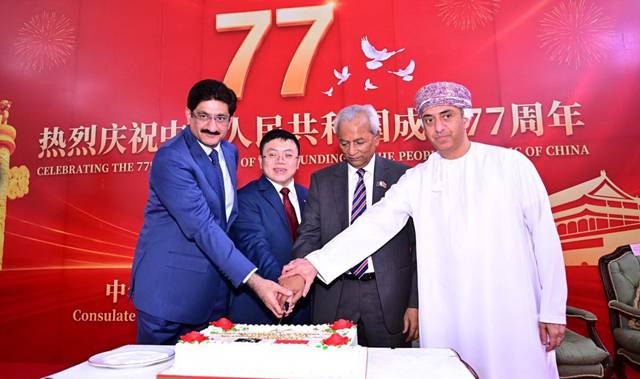
The Sindh government is preparing an investment conference in China as it seeks to attract new Chinese capital into the province. Sindh Senior Minister for Information and Transport Sharjeel Inam Memon said on September 24 that agreements worth billions of rupees were expected across different sectors.
The conference is intended to present investment opportunities in Sindh and attract international investors, with Chief Minister Sindh also expected to attend.
The announcement comes after a series of Pakistan-China business engagements in 2026. For Sindh, the immediate question is which sectors can convert Chinese interest into productive investment, local manufacturing and export capacity.
Chinese Investment in Sindh Is Moving Toward Industry
The latest initiative comes as Pakistan and China are placing greater emphasis on business-to-business investment and industrial cooperation.
In April, President Asif Ali Zardari invited Chinese investment in areas including alternate energy, water treatment and electric-vehicle battery systems. The meeting also involved Sindh’s senior leadership and officials responsible for investment and public-private partnership projects.
The focus on investment rather than only infrastructure is important.
Pakistan’s recent B2B engagements with Chinese companies have increasingly targeted manufacturing, technology transfer and joint ventures. In August, Pakistan’s Ministry of Industries and Production said its B2B strategy was aimed at investment, technology transfer and export growth.
For Sindh, this creates a potential route toward attracting companies that establish production facilities rather than simply supplying finished goods.
What Sectors Could Attract Chinese Investors?
Several sectors already identified in Pakistan-China engagement could become relevant to Sindh.
Electric Vehicles and Batteries
Electric vehicles and battery manufacturing are among the clearest areas of emerging cooperation.
Pakistan’s Ministry of Industries and Production said in May that Chinese investors had expressed interest in EV assembly, EV batteries and advanced energy-storage batteries. The ministry also said the government was working on policies to facilitate local battery manufacturing and technology development.
A separate June agreement between Pakistan’s Saigols Group and China’s Hebei Juhang Energy Technology Group covered lithium-ion batteries, energy-storage systems and EV charging infrastructure.
Sindh’s industrial base and major commercial centres could make the province relevant to this emerging supply chain, although individual projects would still depend on land, power, infrastructure, financing and regulatory approvals.
Renewable Energy and Energy Storage
Energy is another potential area.
Pakistan’s leadership has actively encouraged Chinese investment in alternate energy, while Chinese companies have extensive experience in solar equipment, battery storage and other clean-energy technologies.
This could create opportunities not only for power generation but also for local assembly and manufacturing of equipment.
That distinction matters. Importing renewable-energy equipment can help meet immediate demand, but establishing local manufacturing can create jobs, supplier networks and technical capabilities.
Pharmaceuticals and Healthcare
Pharmaceuticals have already emerged as a major area of Pakistan-China B2B engagement.
A Pakistan-China pharmaceutical and healthcare conference in July 2026 attracted Chinese companies from pharmaceuticals, biotechnology, vaccines, medical devices, diagnostics and healthcare services.
The conference later produced agreements valued at hundreds of millions of dollars, according to Pakistan’s Ministry of Information.
For Sindh, Karachi’s established pharmaceutical, healthcare and industrial ecosystem could provide a base for future Chinese partnerships.
Agriculture and Food Processing
Agriculture is another sector where investment could move beyond traditional trade.
Pakistan and China held an agriculture-focused investment conference in January 2026, where the government said Chinese and Pakistani companies signed 79 MoUs worth approximately $4.5 billion.
The government’s agriculture investment agenda has emphasised technology transfer, value-chain development and export-oriented production.
For Sindh, the relevance extends from farming into food processing, cold chains, agricultural machinery, irrigation and value-added food products.
Sindh’s Connection With China’s Provinces
The province has also been strengthening sub-national links with China.
In September, a Sindh government delegation participated in the Hunan International Friendship Cities Economic and Trade Exchange Event in Changsha. The delegation explored cooperation with Hunan in investment, trade and people-to-people exchanges.
Sindh and Hunan also signed a letter of intent aimed at strengthening institutional, economic, trade, investment, technological and cultural cooperation.
Such provincial relationships can matter because investment decisions are often driven by direct connections between companies, industrial zones, provincial authorities and local business associations.
Why Manufacturing Matters More Than Headlines
Sindh’s investment strategy will face an important test: whether announced agreements lead to physical projects.
Pakistan has recorded large numbers of Chinese B2B agreements in recent years. In September 2025, the government said a Pakistan-China B2B conference in Beijing produced 21 joint-venture agreements worth $1.5 billion and more than 100 MoUs worth over $7 billion.
These figures demonstrate the scale of interest generated by business diplomacy, but an MoU is not the same as completed investment.
For Sindh, the most meaningful projects will be those that reach financial closure, establish production, employ workers, transfer technology and generate exports.
Karachi Could Anchor the Strategy
Karachi naturally sits at the centre of many potential investment opportunities because of its industrial base, port infrastructure, financial institutions and concentration of businesses.
The city also hosted the Pakistan-China pharmaceutical and healthcare B2B conference in July, reinforcing its role as a platform for industrial and commercial engagement.
However, attracting investment to Karachi alone would not necessarily maximise Sindh’s potential.
Projects linked to agriculture, mining, renewable energy, logistics and industrial manufacturing could also be developed elsewhere in the province if infrastructure and investor facilitation are available.
What Chinese Investors Will Need
Investment announcements do not remove the practical requirements faced by companies.
Chinese investors will need clarity on land, taxation, power supply, logistics, foreign-exchange arrangements, regulatory approvals, security and the ability to repatriate profits.
Sindh will also need to show that investment projects can operate competitively after the initial agreement.
This is particularly important for manufacturing. A factory can create employment, but a competitive industrial cluster can create a much larger ecosystem of suppliers, logistics companies, skilled workers and exporters.
The Next Destination for Chinese Investment?
The sectors most closely aligned with current Pakistan-China engagement are likely to include EVs and batteries, renewable energy, pharmaceuticals, agriculture and food processing, industrial manufacturing and technology.
The province’s challenge is to convert broad sectoral interest into specific investment-ready projects.
If the planned China conference produces agreements, the quality of those projects will matter more than the headline value attached to them. Projects that build local supply chains, introduce technology and connect Sindh’s industries with export markets would have a deeper economic effect than deals focused only on importing finished products.
The planned investment conference therefore provides Sindh with an opportunity to present a more targeted proposition to Chinese companies: not simply access to a large market, but specific industrial projects with clear infrastructure, financing, local partners and export potential.
That will determine whether the next phase of China-Sindh cooperation produces announcements or factories, jobs and new industrial capacity.
Read More Articles:
Pak-China Friendship Games Begin in Lahore