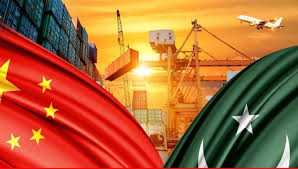


Pakistan is putting renewed pressure behind two of CPEC’s most important transport projects: the Main Line-1 railway upgrade and the realignment of the Karakoram Highway.
The focus is increasingly extending beyond the original China-Pakistan transit function. Government planning documents and recent statements place the two projects within a wider effort to improve freight movement, lower logistics costs and strengthen Pakistan’s role in regional trade.
The timing is significant. CPEC Phase II has identified regional connectivity as one of its five major corridors, alongside growth, innovation, green development and livelihoods. The 2025 CPEC roadmap specifically placed ML-1 and KKH realignment among the flagship connectivity projects requiring accelerated implementation.
ML-1 Moves Back to the Centre
ML-1 is the largest railway modernisation project under CPEC. The CPEC Secretariat lists the planned upgraded and dualised route at 1,733 kilometres, running from Karachi to Peshawar and including the Taxila-Havelian section.
The project is designed to improve track capacity, signalling and telecommunications, rehabilitate bridges and raise operating speeds from roughly 65–105 kilometres per hour to as much as 120–160 km/h. But financing has remained a major hurdle.
In August 2026, Planning Minister Ahsan Iqbal chaired a committee examining financing options for the Rohri-Multan portion, including public-sector funding, foreign financing, public-private partnerships, local commercial banks and domestic capital markets.
The government is now working with the Asian Development Bank on the Karachi-Rohri section. On September 9, the Ministry of Economic Affairs said ADB technical teams and consultants were working to finalise the project design by October, after which procurement and other preparatory stages could proceed.
The railway’s commercial importance is straightforward: better rail infrastructure can move larger volumes of freight between Pakistan’s ports and industrial centres at lower logistical cost.
KKH Realignment Has a Different Urgency
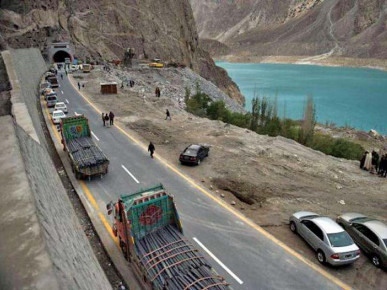
The Karakoram Highway project is driven partly by geography. Construction of the Diamer-Bhasha Dam requires sections of the existing KKH to be relocated. Under the current phased plan, Phase-II(A) will relocate the highway from Thor Nullah to Raikot over 102 kilometres, including 88 kilometres of new alignment and 14 kilometres of link roads.
Phase-II(B) covers another 139 kilometres of existing KKH, including sections from Thakot to Dasu and Sazin to Thor Nullah. Pakistan and China have agreed on an 85:15 financing arrangement, with efforts continuing to finalise the financing agreement.
The project therefore has two functions. It protects a vital north-south road connection from being disrupted by the reservoir and provides an upgraded route within the wider China-Pakistan connectivity system.
From Bilateral Corridor to Regional Trade Route
The larger economic argument is what these projects can carry once they are operational. Pakistan’s Economic Survey 2025–26 described CPEC as contributing to lower trade and transit costs, improved logistics efficiency and greater integration with regional and global value chains. The same survey highlighted the KKH realignment as part of that connectivity agenda.
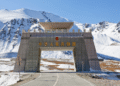
ML-1 can connect Karachi’s port infrastructure with major industrial and population centres across Pakistan. The KKH, meanwhile, links northern Pakistan with China through the Khunjerab border.
Together, they form two different ends of a larger logistics network: rail-based movement across Pakistan and road connectivity towards China.
That does not automatically turn Pakistan into a regional trade hub. Border procedures, customs, warehousing, freight services, industrial production and the competitiveness of Pakistani exports will determine whether improved infrastructure translates into higher trade volumes.
The Financing Test Comes First
For both projects, implementation remains the decisive issue. Pakistan has repeatedly committed to fast-tracking ML-1 and KKH realignment. In May 2026, Prime Minister Shehbaz Sharif reiterated the government’s commitment to accelerating both projects during meetings with China Communications Construction Corporation and China Road and Bridge Corporation.
But strategic importance does not remove the practical questions of financing, procurement and construction.
For CPEC 2.0, the objective is increasingly clear: infrastructure should serve production and trade, not exist as an end in itself.
The real test will therefore come when the upgraded railway and highway begin moving more cargo, more efficiently, towards Pakistani ports, Chinese markets and potentially the wider Central Asian region.
Read More Articles:
Iranian President Calls for Stronger Pakistan Ties