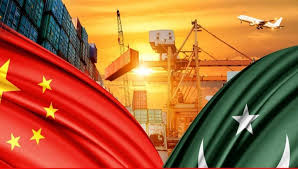

Pakistan and China have reaffirmed their commitment to strengthening political party exchanges and governance cooperation as both countries seek to deepen their longstanding strategic partnership.
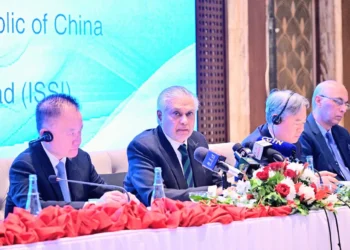
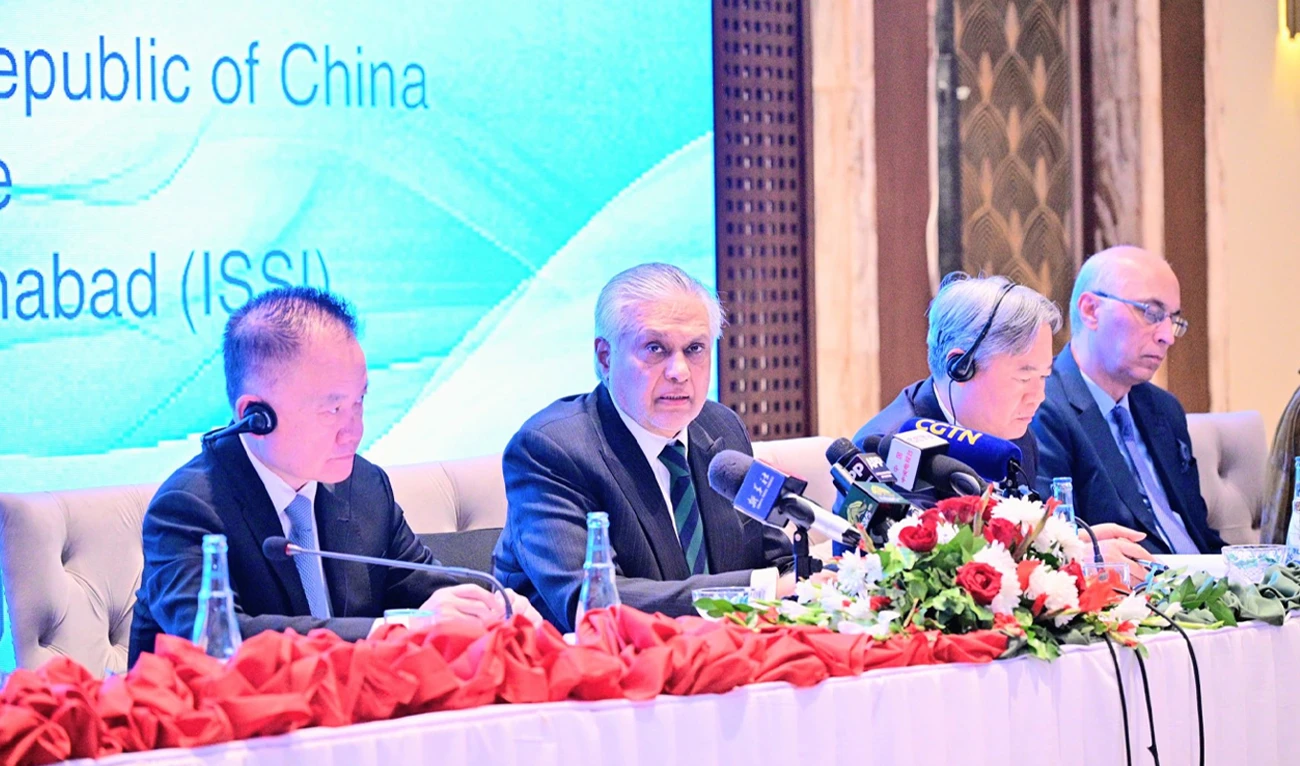
Deputy Prime Minister and Foreign Minister Mohammad Ishaq Dar and Liu Haixing, Minister of the International Department of the Communist Party of China (CPC) Central Committee, co-chaired the Symposium on Xi Jinping Thought on Party Building and Pakistan-China Seminar on Governance in Islamabad on Monday.
The event was jointly organised by the Institute of Strategic Studies Islamabad (ISSI) and the Chinese Embassy in Pakistan. It brought together political leaders, government representatives and experts to discuss governance, institutional development, political cooperation and long-term national development.
The discussions focused on how Pakistan and China could benefit from exchanging experiences in governance, strengthening political institutions and promoting development policies that improve public welfare.
Ishaq Dar Highlights China’s Governance Experience
Addressing the symposium, Ishaq Dar highlighted China’s development achievements under the leadership of the Communist Party of China. He identified institutional discipline, anti-corruption measures, organisational capacity and people-centred governance as important elements of China’s development experience.
Dar said Pakistan was pursuing governance reforms, institutional modernisation and economic transformation. He stressed that closer exchanges between political parties could help both countries share practical experiences and strengthen their cooperation.
He also emphasised the importance of political understanding and institutional coordination in advancing the Pakistan-China All-Weather Strategic Cooperative Partnership.
According to Dar, stronger cooperation should focus not only on political relations but also on effective governance, public service delivery, accountability and sustainable development.
Liu Haixing Explains China’s Approach to Governance
Liu Haixing said the Communist Party of China’s experience in party building and governance offered valuable theoretical and practical insights.
He highlighted ideological unity, strategic direction, organisational discipline and placing people at the centre of policymaking as important factors in strengthening governance institutions.
Liu also discussed the CPC’s efforts to improve internal governance and combat corruption while pursuing development aimed at improving people’s lives.
He clarified that China did not seek to export its governance model or ask other countries to copy its political system. Instead, Beijing supported dialogue, experience-sharing and mutual learning through exchanges between political parties.
His remarks highlighted the importance of respecting national conditions while encouraging countries to learn from one another’s development experiences.
Five Priority Areas for Governance Cooperation
Dar outlined five broad areas that could guide stronger governance cooperation between Pakistan and China.
These priorities include:
- Stronger political party organisations: Improving internal cohesion, organisational capacity and connections between political parties and local communities.
- Long-term development planning: Promoting high-quality development, modernisation and consistent national planning.
- People-centred public services: Building public trust through better service delivery and ensuring ordinary citizens benefit from economic development.
- Anti-corruption and accountability: Strengthening transparency and responsible use of public office.
- Political cooperation and mutual learning: Encouraging respect, non-interference, cooperation and exchanges of experience between political parties.
The proposed areas reflect a shared interest in improving institutional performance and making governance more effective and accountable.
Pakistan’s Leadership Calls for Institutional Cooperation
Senator Sherry Rehman conveyed a message on behalf of President Asif Ali Zardari, highlighting China’s institutional strength and social transformation.
She noted China’s progress in education, technology and innovation, saying Pakistan could learn from its development experience while adapting relevant lessons to its own national circumstances.
Rehman also emphasised the importance of the China-Pakistan Economic Corridor (CPEC) in bilateral relations. She said its next phase should focus on agricultural modernisation, industrialisation, job creation and sustained political commitment.
In a message from Prime Minister Shehbaz Sharif, read by Ishaq Dar, the premier said countries across the Global South could draw lessons from the CPC’s governance experience while following development paths suited to their individual national conditions.
The message highlighted the importance of political consultations and cooperation under CPEC 2.0, particularly in agriculture, artificial intelligence, industrialisation and green energy.
It also referred to Chinese President Xi Jinping’s Global Development Initiative, Global Security Initiative and Global Governance Initiative.
Ahsan Iqbal Highlights Lessons from China’s Development
Federal Minister for Planning, Development and Special Initiatives Ahsan Iqbal highlighted China’s grassroots governance structures, leadership training and continuity in development planning.
He said these areas offered important lessons for Pakistan, particularly as the country works to strengthen its institutions and improve economic performance.
Iqbal also referred to China’s achievements in poverty alleviation, stressing that Pakistan needed greater policy continuity, stronger accountability and investment in developing new leadership.
He recalled that CPEC began when Pakistan faced serious challenges involving security, electricity shortages and limited investment. The minister emphasised the importance of continued cooperation to support Pakistan’s development priorities.
Political Exchanges and CPEC 2.0 Remain Central to Bilateral Ties
The symposium also highlighted the importance of political engagement in advancing the next phase of Pakistan-China cooperation.
Dar previously proposed five political corridors to strengthen bilateral relations. These include political dialogue, governance cooperation, youth engagement, people-to-people exchanges and regional cooperation.
He has also called for stronger institutional links between Pakistan’s Parliament and China’s National People’s Congress and Chinese People’s Political Consultative Conference.
Cooperation among think tanks, universities and training institutions was also identified as an important area, particularly in governance, poverty alleviation and development planning.
The two countries have continued to expand party-to-party engagement through platforms such as the China-Pakistan Political Parties Forum and the CPEC Political Parties Joint Consultation Mechanism.
During Dar’s visit to Beijing in May 2026, both sides held the second China-Pakistan Political Parties Forum and the fourth meeting of the CPEC Political Parties Joint Consultation Mechanism. An agreement between the Communist Party of China and Pakistan Muslim League-Nawaz was also signed to promote structured political exchanges.
These platforms provide opportunities for political representatives to discuss development priorities, share institutional experiences and strengthen coordination on bilateral initiatives.
Pakistan-China Partnership Marks 75 Years
The symposium took place as Pakistan and China mark the 75th anniversary of the establishment of diplomatic relations in 2026.
Over the decades, the relationship has expanded across political, economic, defence, infrastructure and people-to-people cooperation. Both countries have repeatedly described their partnership as an all-weather strategic cooperative relationship.
CPEC remains a major pillar of this cooperation. Its second phase, commonly referred to as CPEC 2.0, is expected to place greater emphasis on industrialisation, agriculture, technology, employment, green development and investment.
The Islamabad symposium reinforced the importance of political consensus, institutional cooperation and long-term planning in achieving these objectives.
Both sides underscored that sustained political exchanges and mutual learning could help strengthen bilateral relations and support their shared development goals.
Read More Articles:
Ishaq Dar and Iran’s Araghchi Discuss Regional Peace
Pakistani Cadets Win Silver at China’s International Army Cadets Week