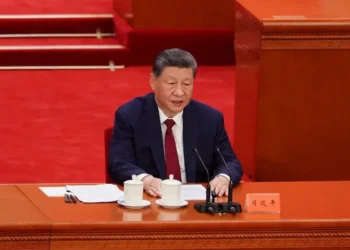

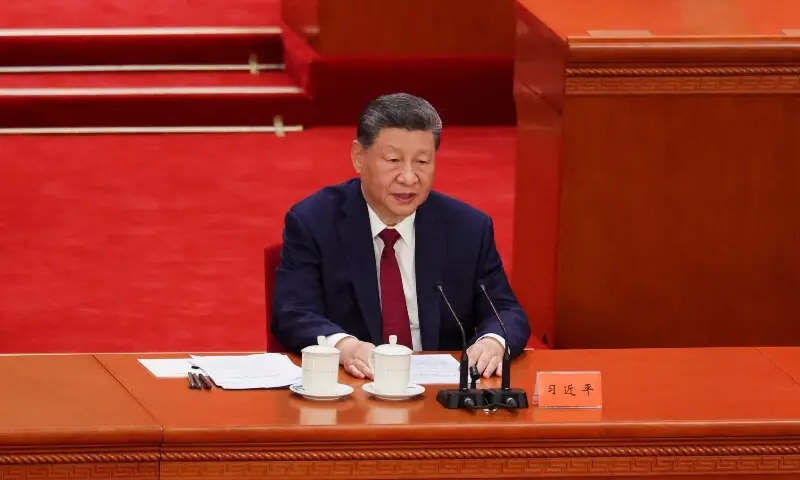
The Communist Party of China (CPC) Central Committee began a four-day plenary session in Beijing on Monday, focusing on strengthening full and rigorous Party self-governance.
The session reflects the Party leadership’s continued emphasis on discipline, internal oversight and efforts to address corruption under Xi Jinping, general secretary of the CPC Central Committee.
Xi has repeatedly described Party self-governance as a long-term responsibility, linking it to effective governance, national stability and China’s future development.
Xi Jinping Makes Party Discipline a Long-Term Priority
After becoming general secretary in November 2012, Xi called for strong internal discipline, using the expression that those seeking to strike iron must first be strong themselves. He has also warned that unchecked corruption could threaten the Party and the state.
In 2014, Xi formally advanced the concept of exercising full and rigorous Party self-governance as part of the CPC’s broader governing strategy. The other priorities include building a moderately prosperous society, deepening reform and advancing law-based governance.
According to the Party leadership, strengthening internal governance is essential to maintaining the CPC’s governing capacity and supporting China’s long-term development.
Eight-Point Rules Target Official Misconduct
In December 2012, the CPC introduced a code of conduct known as the eight-point rules to regulate official behaviour and reduce bureaucratic excesses.
The rules address matters including official research visits, meetings, documentation and administrative practices. They also target lavish banquets, unnecessary ceremonies, excessive entourages, lengthy meetings and luxury benefits for officials.
Xi said in 2025 that the rules had brought fundamental changes over the years. The Party subsequently launched a campaign to reinforce their implementation and consolidate earlier progress.
The measures form part of broader efforts to improve officials’ conduct and strengthen accountability in public administration.
Anti-Corruption Campaign Continues
The CPC has pursued an extensive anti-corruption campaign targeting misconduct at different levels of the Party and government, including senior officials and lower-ranking public servants.
According to figures cited in the source report, 115 officials at ministerial level or above were placed under investigation in 2025, while 627,000 people were disciplined in cases involving misconduct and corruption affecting the public’s immediate interests. China also opened investigations into more than 500 cross-border corruption cases during the year.
Xi has continued to call for sustained action against corruption, warning that no official should be exempt from accountability because of rank or previous contributions.
At a plenary session of the CPC’s top disciplinary body earlier in 2026, he reiterated that the fight against corruption must continue despite resistance or potential costs.
Institutional Reforms Strengthen Oversight
The CPC has also expanded its institutional mechanisms for supervision and internal accountability.
Over the past 14 years, Party leadership structures have been reinforced through changes to Party and state frameworks. Central commissions and coordination mechanisms have been established or strengthened in areas such as reform, national security, cyberspace, finance and economic affairs.
The Party has also conducted nine major education campaigns under Xi’s leadership. The latest, launched in February 2026, focused on encouraging officials to adopt a more people-centred approach to governance performance and discouraging efforts to improve personal records at the expense of public welfare.
Meanwhile, the establishment of the National Commission of Supervision and local supervisory commissions expanded oversight of public officials, including those who are not CPC members.
Discipline Inspections and Regulations Limit Abuse of Power
Discipline inspections remain a central part of the CPC’s internal oversight system. Inspection teams examine officials’ conduct, review documents, interview officials and members of the public, and receive complaints about the implementation of central policies.
Xi has reviewed inspection findings and called for improvements to address problems identified during these reviews.
Since 2012, the Party has also introduced or revised a large number of internal regulations intended to strengthen institutional controls over the exercise of power.
Xi has cautioned, however, that rules are not always properly enforced in some localities and that informal practices can undermine formal regulations. He has called for stronger implementation and greater transparency to prevent abuses of authority.
These measures are intended to ensure officials lack the audacity, opportunity and desire to engage in corruption.
Party Governance Linked to China’s Modernization Goals
The CPC’s self-governance agenda is also linked to China’s broader economic and social development plans.
Xi has said that achieving the objectives of the 15th Five-Year Plan for 2026–2030 requires stronger Party capacity to lead economic and social development.
He has urged officials to improve their ability to promote high-quality development, serve the public and identify and manage risks.
China is pursuing its goal of basically realizing modernization by 2035 amid changing international conditions and domestic challenges. The Party leadership considers effective governance and disciplined implementation of policies important to achieving these objectives.
Plenary Session Focuses on Future Governance Priorities
The fifth plenary session provides an opportunity for the CPC Central Committee to review the challenges facing Party building and consider measures to strengthen internal governance.
The broader agenda includes reinforcing discipline, improving oversight, addressing corruption and ensuring that officials implement Party policies effectively.
Through these efforts, the CPC leadership aims to strengthen the Party’s institutional capacity and maintain its role in guiding China’s modernization drive.
Read More Articles:
China’s CPC Begins Fifth Plenary Session in Beijing