CPEC 2.0 Security: A Changing Challenge
CPEC 2.0 security is becoming a central concern as the China-Pakistan Economic Corridor expands beyond major infrastructure into industry, agriculture, mining and private-sector investment. Protecting Chinese personnel and projects will require more than guards and secure facilities. Pakistan must also strengthen intelligence-led prevention, law-enforcement coordination and emergency response to build the confidence needed for sustained Chinese investment.
The scale of CPEC’s transition is reflected in official figures. At its 92nd Progress Review Meeting on 31 August 2026, Pakistan’s CPEC Secretariat reported that Phase I had attracted approximately US$25 billion in Chinese investment and added nearly 8,000 megawatts to the country’s power-generation capacity. Phase II, meanwhile, is intended to deepen cooperation in industry, agriculture, minerals, technology and human-resource development, with a stronger role for private-sector partnerships. This wider economic transition also raises questions about the institutions and conditions needed to make CPEC 2.0’s ambitions viable.
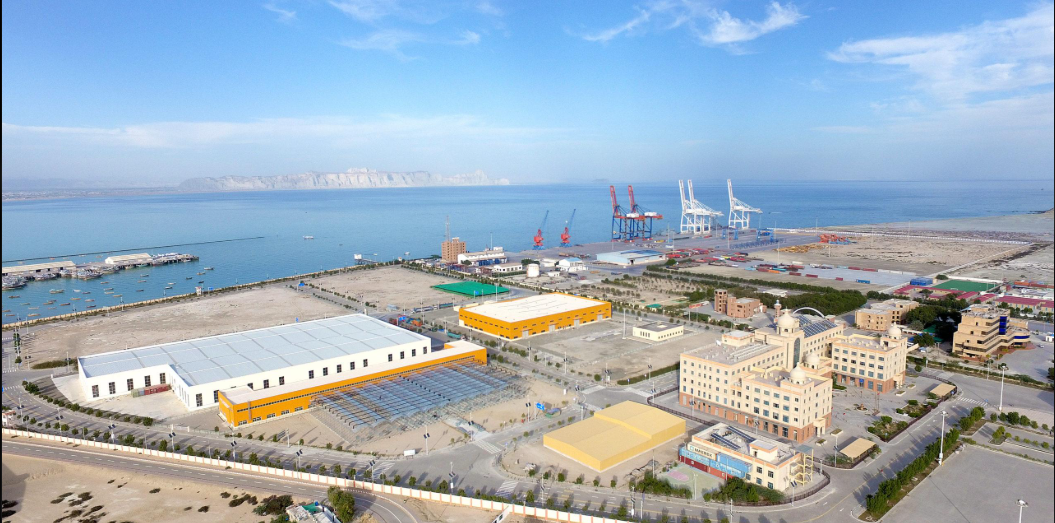
This shift changes the security challenge. A power plant or port facility can be protected through controlled entry points, surveillance and dedicated security arrangements. An expanding network of industrial units, mines, supply chains, agricultural operations and private businesses presents a different problem. Personnel move between locations, goods travel along public roads, and commercial activity extends beyond the boundaries of any single project. Security arrangements must therefore account for both individual sites and the wider environment in which investment operates.
Attacks have exposed the stakes
Attacks targeting Chinese nationals have already demonstrated the consequences of security failures. On 26 March 2024, five Chinese nationals and one Pakistani national were killed in a suicide attack near Besham in Khyber Pakhtunkhwa. The Chinese nationals were associated with the Dasu hydropower project. Pakistan’s Foreign Office condemned the attack and reiterated the state’s commitment to protecting Chinese nationals, projects and institutions.
On 7 October 2024, an attack near Karachi’s airport killed two Chinese engineers and injured another. The incident again underscored the vulnerability of personnel operating outside the controlled boundaries of major project sites.
These incidents do not, by themselves, establish that every existing security arrangement has failed. They do, however, demonstrate why protection cannot be assessed solely by counting guards, checkpoints or secured facilities. Effective security also depends on identifying threats before an attack, sharing relevant intelligence, coordinating across jurisdictions and responding quickly when risks emerge.
The challenge becomes more demanding as CPEC’s commercial footprint expands. Industrial investors need to move staff, equipment and products reliably. Mining and agricultural projects may operate across geographically dispersed locations. Business partnerships also depend on predictable conditions for travel, logistics and day-to-day operations. A security system designed primarily around fixed infrastructure must adapt to these changing requirements.
CPEC 2.0 Security and Pakistan-China Cooperation
Recent bilateral initiatives indicate that Pakistan and China recognise the need to strengthen security cooperation. On 16 September 2026, Interior Minister Mohsin Naqvi met Chinese Vice Minister of Public Security Gao Qi. According to Radio Pakistan, the two sides agreed to enhance police-training exchanges and cooperation involving modern technology and equipment. China also agreed to assist Pakistan in establishing a modern law-enforcement centre. For CPEC 2.0 security, the priority is to turn bilateral commitments into practical cooperation, with clear responsibilities, timely information-sharing and stronger investigative capacity.
The proposed centre could become part of a broader effort to improve investigative capacity and modernise law enforcement. However, the announcement should be understood as a cooperation commitment, not evidence that a fully integrated security system is already operational. Its eventual contribution will depend on implementation, institutional responsibilities, training, technology deployment and coordination between relevant agencies.
The agreement also reflects a wider policy commitment. In the joint communiqué issued after the seventh China-Pakistan Foreign Ministers’ Strategic Dialogue in Beijing on 5 January 2026, both countries pledged to deepen counterterrorism and security cooperation and ensure that their Belt and Road cooperation advances securely and smoothly. The communiqué also identified industry, agriculture and mining as key areas for CPEC 2.0.
The relationship between these commitments matters. If Pakistan and China intend to expand investment into sectors with different operational and geographical requirements, security cooperation must evolve alongside economic planning. Training, intelligence-sharing, investigative capacity and clear channels for coordination can help create the institutional foundations for that transition.
Why CPEC 2.0 Security Needs More Than Guards
Physical security remains essential. Guards, access controls, secure transport arrangements and surveillance can deter attacks and reduce exposure to threats. But these measures are only one layer of a wider security system. They are less effective when agencies lack timely intelligence, responsibilities overlap, information is not shared or responses are delayed.
An intelligence-led approach places greater emphasis on prevention. This includes assessing emerging threats, identifying suspicious activity, improving communication between federal and provincial authorities, and ensuring that law-enforcement agencies can act on credible information. It also requires reliable procedures for incident reporting, emergency response and the protection of personnel travelling between project locations.
Pakistan and China’s Action Plan to foster an even closer China-Pakistan community with a shared future for 2025–2029 provides an official framework for this work. The document calls for stronger security coordination and targeted safety measures to protect Chinese personnel, projects and institutions. It also identifies legal and judicial cooperation and the strengthening of border law-enforcement arrangements as areas for continued engagement.
These commitments establish a policy direction, but implementation is the decisive test. Better coordination requires clear lines of responsibility, trained personnel, functioning communication systems and mechanisms to evaluate whether measures are reducing risk. New equipment and technology can strengthen these efforts, but neither can substitute for capable institutions and consistent execution.
Technology must be matched by institutional capacity
Modern surveillance tools, digital systems and artificial-intelligence-based applications may help law-enforcement agencies analyse information, monitor risks and improve operational efficiency. Their value, however, depends on the quality of the information available, the expertise of the personnel using them and the safeguards governing their deployment.
Technology is not a complete security strategy in itself. Poor coordination can undermine sophisticated systems, while gaps in training or investigative capacity can limit their practical value. Investment in equipment must therefore be accompanied by investment in people, procedures and institutional accountability.
Security planning must also take account of the local conditions in which projects operate. Effective communication with affected communities, responsive public services and credible channels for addressing grievances can support a more stable environment for legitimate economic activity. Such measures should not be confused with counterterrorism operations: community engagement cannot replace intelligence or law enforcement. It can, however, form part of the wider governance framework within which development projects function.
This broader perspective is particularly relevant to CPEC 2.0, where private-sector participation is expected to play a larger role. Investors assess not only whether a particular facility has security personnel, but also whether employees can travel safely, supply chains can function reliably and disruptions can be managed. Security consequently becomes part of the investment climate, affecting operational continuity and commercial confidence. A sustainable CPEC 2.0 security framework must combine modern technology with trained personnel, accountable institutions and effective coordination between agencies.
Security will shape CPEC 2.0’s investment prospects
CPEC’s next phase is intended to generate economic activity beyond the infrastructure built during its first phase. That ambition requires a security model capable of supporting a more diverse set of projects, companies and locations. The challenge is not simply to reproduce the protective arrangements used for major infrastructure, but to adapt them to an economy in which investment will be spread across different sectors and operating environments. CPEC’s earlier energy investments also show how the corridor’s economic impact extends into the operation and efficiency of individual projects.
Pakistan’s commitments to expand police training, develop modern law-enforcement capacity and deepen cooperation with China provide a foundation. The Action Plan for 2025–2029 and the January 2026 strategic dialogue also establish clear bilateral commitments on security and counterterrorism.
The next step is to translate those commitments into coordinated, measurable and sustainable improvements.
For CPEC 2.0, the test will be whether Pakistan can protect people and projects while creating conditions in which businesses can operate with greater predictability. Guards and secure perimeters will remain necessary, but they cannot carry that responsibility alone. Intelligence, policing, technology, emergency response and effective governance must work together. Ultimately, CPEC 2.0 security will be measured not only by the protection of individual sites, but also by Pakistan’s ability to sustain safe and predictable conditions for investment across sectors.
The future of CPEC’s investment ambitions will depend in part on whether security arrangements evolve at the same pace as the corridor’s economic ambitions. Protecting individual projects is essential. Protecting the wider ecosystem that connects them is the larger challenge.