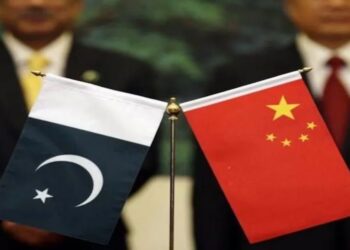

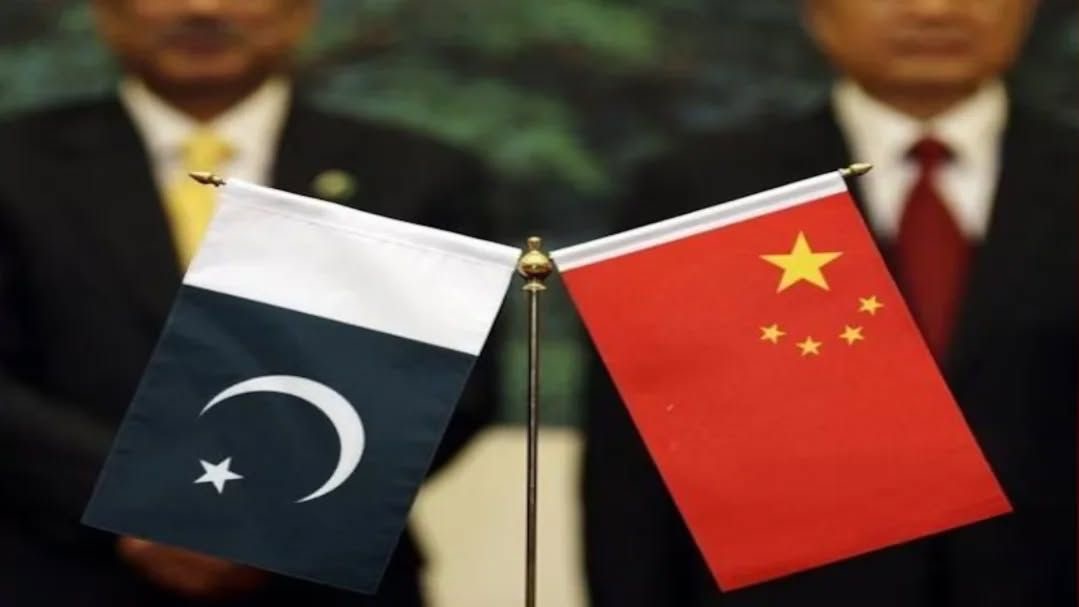
Pakistan’s exports to China increased by 40.5% during the first eight months of 2026, reaching $2.386 billion compared with $1.698 billion during the same period in 2025, according to the Associated Press of Pakistan (APP), citing official data from China’s General Administration of Customs.
The increase of nearly $688 million offers an important perspective amid circulating claims that the China–Pakistan Free Trade Agreement (CPFTA) has devastated Pakistan’s manufacturing .
Pakistan’s Exports to China Record Significant Growth
The latest trade figures indicate expanding opportunities for Pakistani businesses in the Chinese market. According to APP’s October 2 report, Pakistan exported goods worth $2.386 billion to China between January and August 2026, representing a year-on-year increase of 40.51%.
The growth was driven by refined metals, agricultural commodities and textiles. Refined copper products recorded an increase of 68.51%, while exports of sesame seeds rose by 86.90%. Fishmeal exports also increased substantially, registering growth of 146.95%.
These figures highlight the range of Pakistani products finding demand in China, extending beyond conventional discussions of bilateral trade that focus primarily on imports.
The expansion also demonstrates the potential for Pakistani exporters to access a large international market by improving product quality, meeting regulatory requirements and developing stronger business relationships with Chinese buyers.
Are Claims About the China–Pakistan Free Trade Agreement Misleading?
Recent social media discussions have included claims that the China–Pakistan Free Trade Agreement has reduced Pakistan’s manufacturing capacity to zero and turned the country into a dumping ground for Chinese products. Some reports have also attributed industrial closures and unemployment in Faisalabad to Chinese imports.
Such claims require careful scrutiny. Allegations concerning factory closures, job losses and their causes should be supported by independently verifiable industrial data rather than presented as established facts.
Pakistan’s export growth provides relevant context that is often missing from these sweeping narratives. While rising exports do not prove that all Pakistani industries are benefiting from bilateral trade, they demonstrate that the economic relationship involves more than Chinese goods entering Pakistan.
A balanced assessment must consider both imports and exports, the competitiveness of domestic industries, the composition of traded goods and the effects of trade policies on different sectors.
Research Shows Potential Benefits for Pakistani Manufacturers
Evidence from academic research further complicates the argument that the free trade agreement has only harmed Pakistan’s industrial sector.
A 2022 peer-reviewed study published in the Journal of Development Economics, titled Trading Textiles Along the New Silk Route: The Impact on Pakistani Firms of Gaining Market Access to China, examined the effects of lower Chinese tariffs on Pakistani textile manufacturers.
The researchers found that productivity among textile manufacturers increased by approximately 3–8%, while product quality improved by 1–2% following improved access to the Chinese market. The study also identified productivity and quality spillovers among certain domestic firms that did not export directly.
However, the findings were not uniformly positive. The research found that firms reduced their product offerings in response to tariff reductions, and exporting firms increased material and labour inputs without a corresponding increase in capital investment.
These findings suggest that access to foreign markets can create opportunities for industrial improvement, but the benefits depend on how businesses respond to changing market conditions.
China–Pakistan Trade: Opportunities and Challenges
Pakistan’s trade relationship with China presents both opportunities and challenges. Increased access to Chinese consumers can create opportunities for Pakistani exporters in agriculture, textiles, metals and processed goods.
At the same time, competition from imported products can place pressure on domestic manufacturers that struggle with production costs, outdated machinery, limited financing or lower productivity.
The policy challenge is therefore not simply whether Pakistan should trade with China, but how Pakistan can strengthen its ability to compete.
Several measures could help Pakistan derive greater value from bilateral trade:
- Expand export diversification: Encourage Pakistani businesses to develop export-ready products beyond traditional commodities.
- Improve industrial productivity: Support modern machinery, skills development, technological upgrades and access to finance.
- Strengthen value addition: Develop domestic processing and manufacturing capacity to capture more value from raw materials.
- Improve trade policy implementation: Evaluate the effects of tariff concessions and address disadvantages faced by vulnerable domestic industries.
- Support small and medium enterprises: Help local businesses meet international quality standards and connect with overseas buyers.
These priorities would help Pakistan pursue a more competitive industrial strategy while making better use of international trade opportunities.
Moving Beyond Misinformation to Evidence-Based Debate
The debate surrounding the China–Pakistan Free Trade Agreement should be informed by verifiable data rather than sweeping conclusions.
The reported 40.51% increase in Pakistan’s exports to China is an important economic development. Nevertheless, export growth alone cannot establish the overall impact of the agreement on Pakistan’s trade balance, industrial employment or manufacturing output.
Similarly, claims that Chinese imports have caused specific factory closures or large-scale unemployment require evidence identifying the affected businesses, the scale of the losses and the contribution of imports relative to other economic factors.
Responsible reporting must distinguish verified statistics from allegations, interpretations and political commentary. Correcting misleading narratives does not require ignoring genuine industrial difficulties; it requires examining those difficulties with evidence and appropriate context.
Conclusion
Pakistan’s export growth to China presents a significant opportunity to reconsider overly simplistic accounts of bilateral trade. With exports reaching $2.386 billion in the first eight months of 2026, Pakistan has demonstrated growing commercial activity in a major international market.
Academic research also indicates that improved access to China’s market has contributed to productivity and quality gains among some Pakistani textile manufacturers, although the benefits have not been uniform.
Pakistan must continue addressing industrial competitiveness, investment constraints and the challenges faced by local manufacturers. A more productive debate will focus on evidence, effective policy and strategies that enable Pakistani businesses to compete internationally.
The objective should be neither to dismiss legitimate concerns nor to amplify unverified claims, but to ensure that public discussion of Pakistan–China trade reflects the available evidence.
Sources :
original APP report:
https://www.app.com.pk/foreign-correspondent/pakistans-exports-to-china-surge-40-5-in-jan-aug-2026/
Journal of Development Economics — Trading Textiles Along the New Silk Route https://www.sciencedirect.com/science/article/abs/pii/S0304387822000888