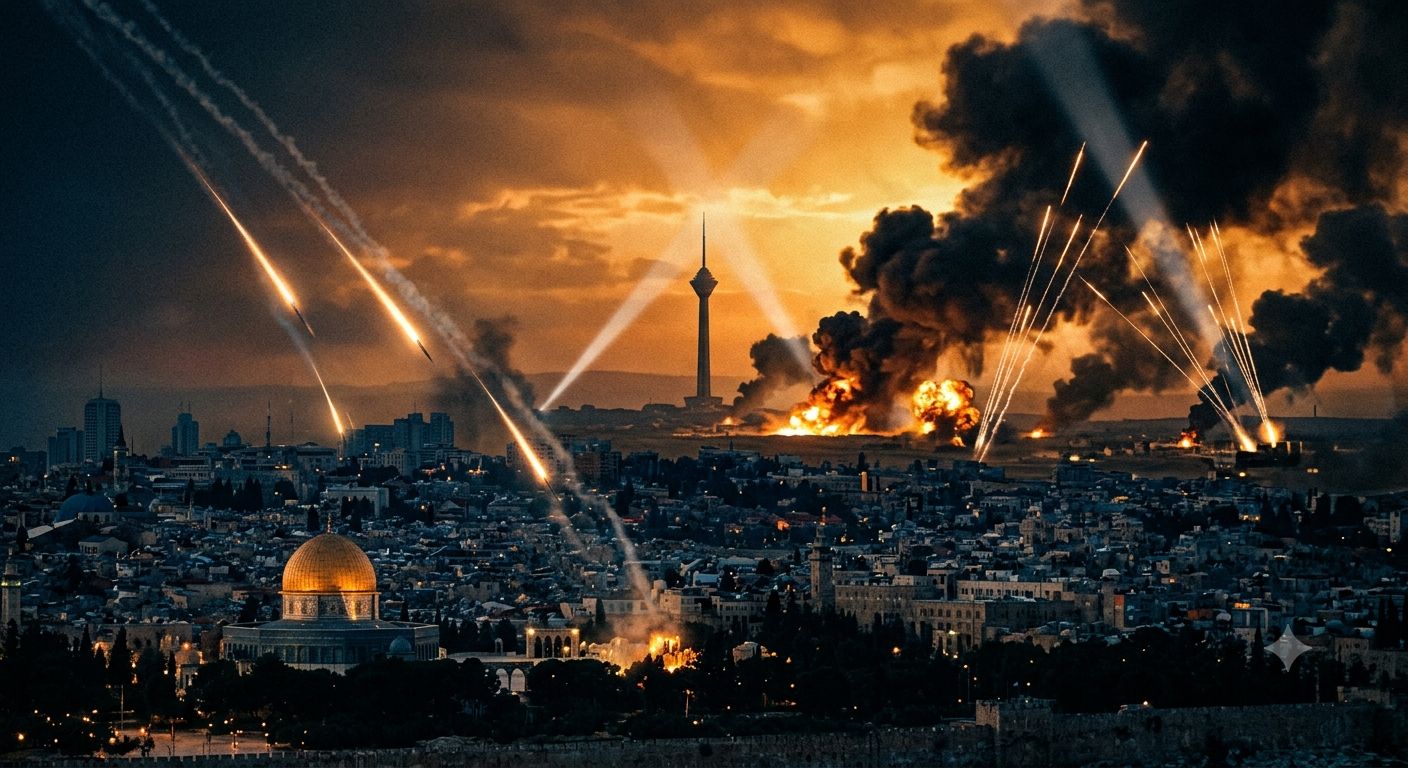
The fragile peace in the Middle East collapsed dramatically overnight as Israel and Iran engaged in a direct exchange of missile fire. This marks the most severe escalation between the two adversaries since a region-wide ceasefire was brokered exactly two months ago on April 7. The swift unraveling of the truce has thrown diplomatic channels into chaos and ignited widespread fears of an all-out regional war.
The crisis began rapidly ascending on Sunday morning when Hezbollah launched rocket volleys into northern Israel. In response, the Israeli Air Force (IAF) executed heavy airstrikes targeting Hezbollah strongholds in the southern suburbs of Beirut. By Sunday night, the conflict escalated to a state-on-state level when Iran unleashed a major ballistic missile barrage directly toward Israeli territory.
Early on Monday, June 8, Israel retaliated with direct air strikes against military installations in western and central Iran. Sirens and heavy detonations were reported by state media across several Iranian hubs, including Isfahan, Tabriz, and the capital, Tehran, where air defense systems were heavily activated. The Israeli military confirmed it is bracing for a sustained campaign, coordinating closely with U.S. Central Command (CENTCOM). Meanwhile, regional leaders from Egypt, Saudi Arabia, and Turkey have initiated urgent, high-level diplomatic phone calls to pacify the situation before the violence becomes entirely uncontainable.
Read More Articles
Iran Escalates Leverage with Undersea Cable
Russia, China, Iran and Turkey Urge Restraint After Pakistan-Afghanistan Escalation